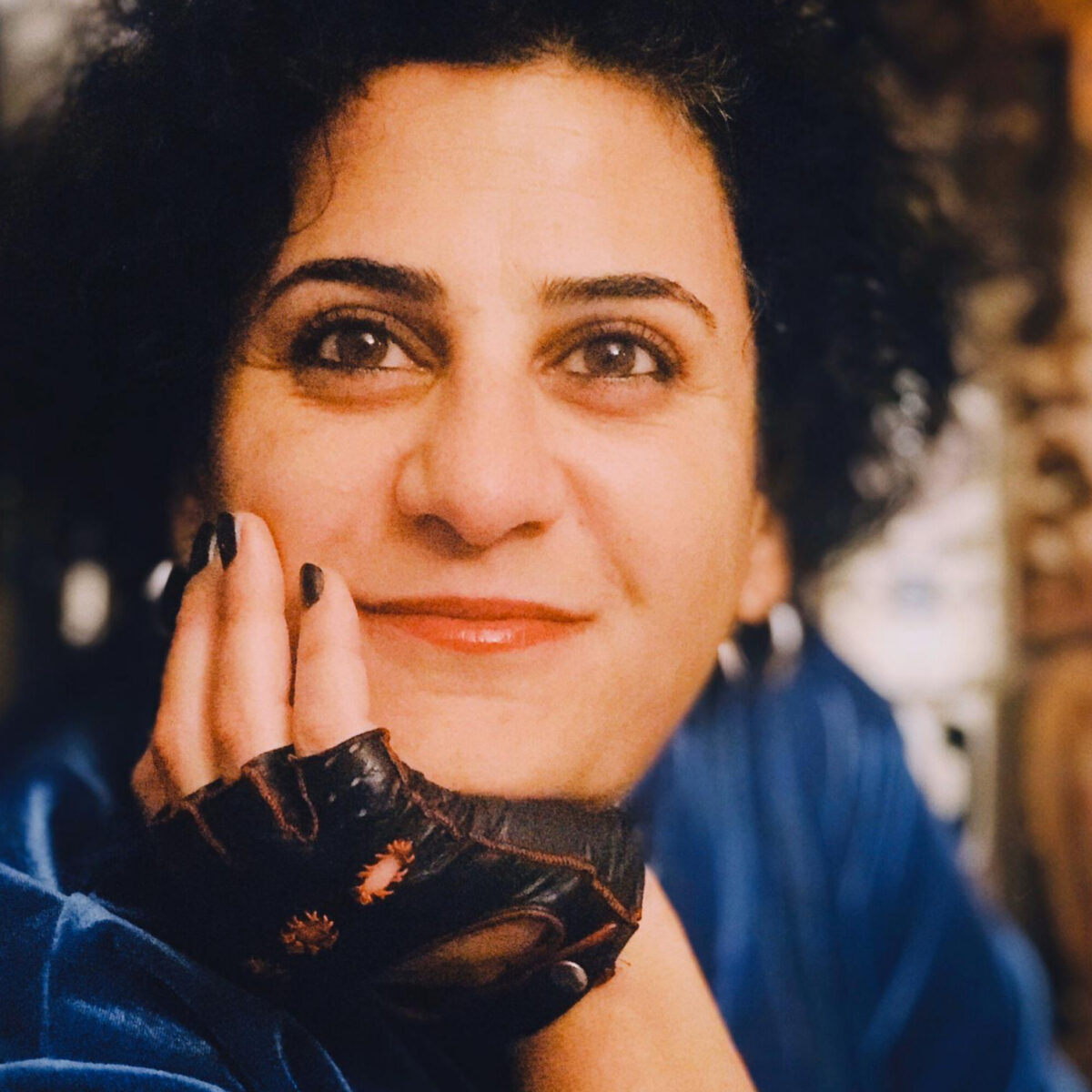
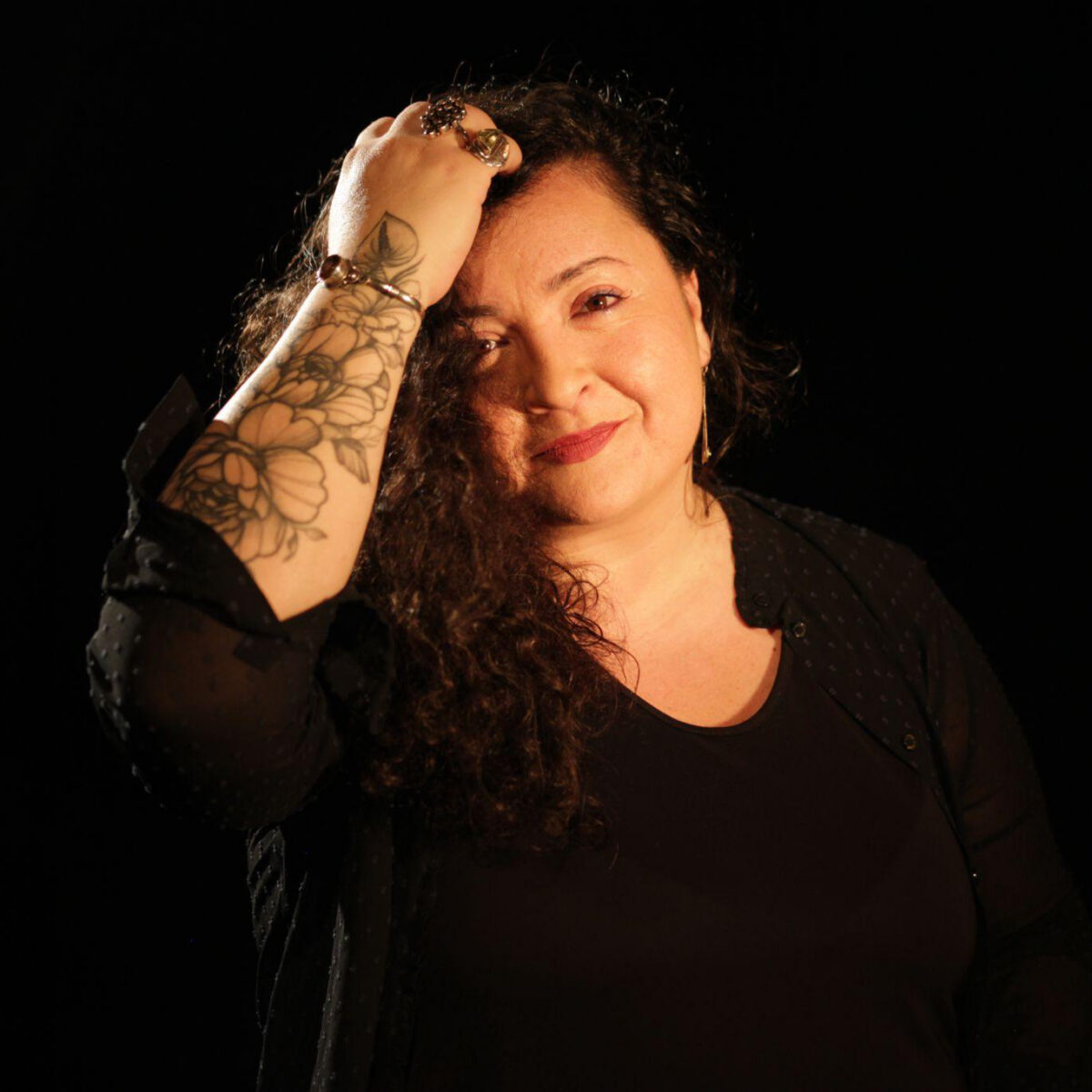
Lamia Abi Azar earned a bachelor’s degree in Clinical Psychology from Saint Joseph University of Beirut in 1999 while studying theatre at the Lebanese University. She then moved to Italy, where she co-founded La Casa del Teatro, a space for theatrical encounters and production in L’Aquila, and earned a degree in History and Practice of Arts, Music and Performance in 2004. Merging the tools she acquired during her studies, Lamia developed a psychosocial methodology in response to the needs of the communities she worked with. A strong believer in the power of imagination as an agent for change, she has led psychosocial interventions since 2000 with women, young people, children, migrants, refugees, and communities affected by violence and conflict. She has devised performances with these groups in Lebanon and abroad, connecting socially engaged work with artistic research and practice. Over the past 20 years, Lamia has created more than 25 performances with Zoukak as a co-deviser, co-director, co-writer, and performer. She has also developed training for theatre practitioners in psychosocial interventions, produced publications on theatre for development, and mentored young artists through Zoukak’s Mentorship Program.
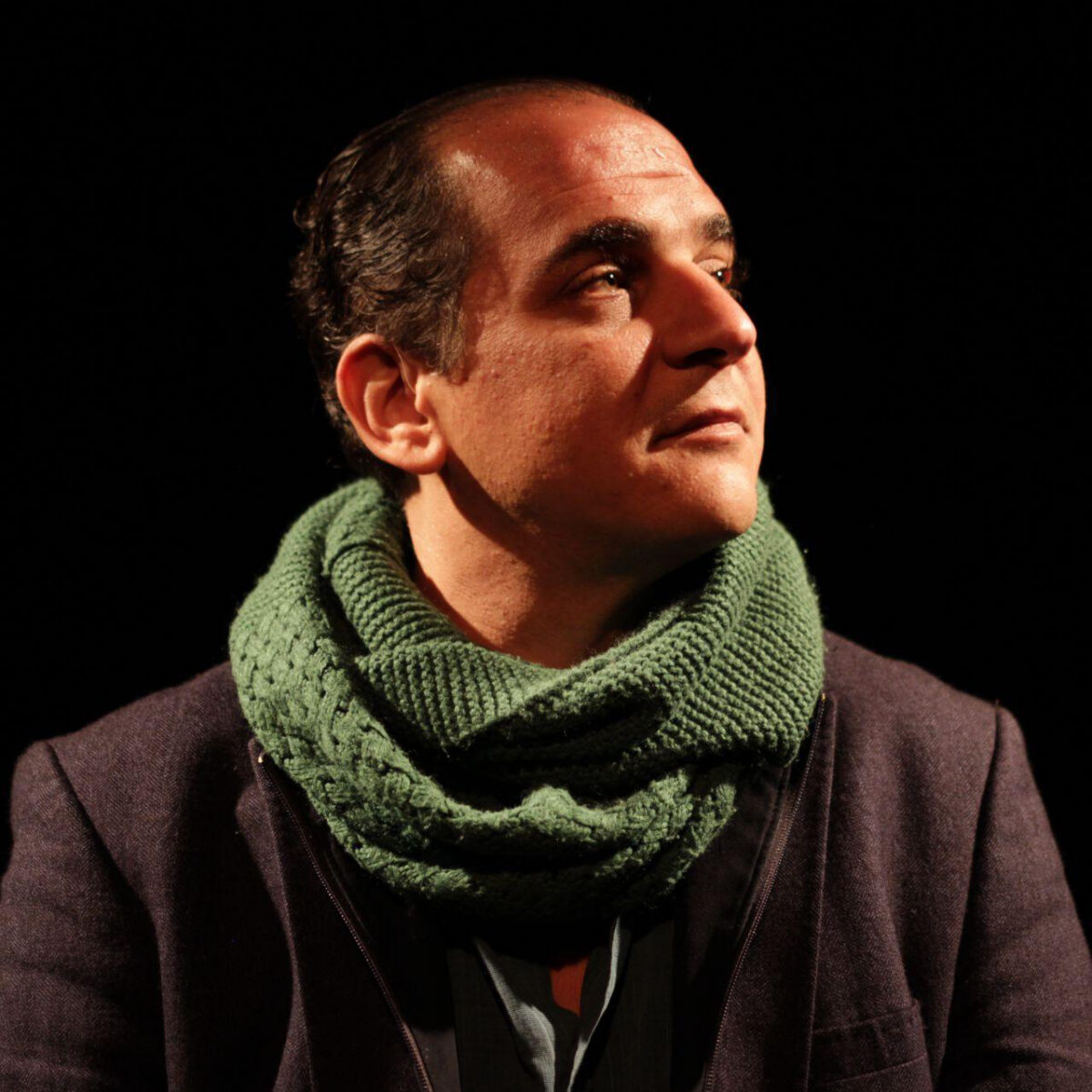
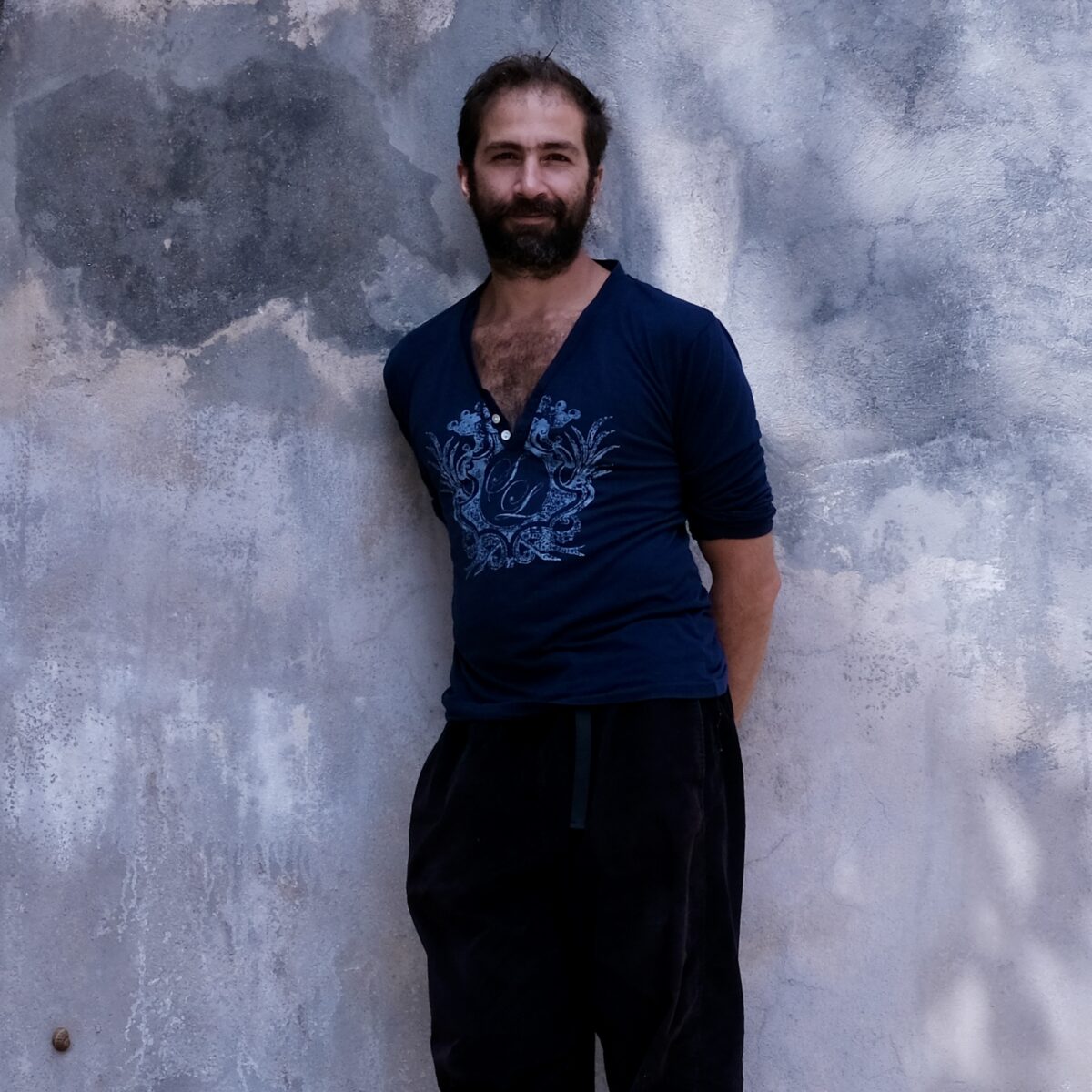
Omar Abi Azar was the dramaturge and director of several of Zoukak’s performances that toured in various cities in the Middle East, Europe, the United States, South America, South Asia and Africa. He was commissioned by international festivals, theatres and universities to create original work: NYUAD’s Performing Arts Center, Cynthia Woods Mitchell Center, University of Houston, Texas, Theaterfestival Schwindelfrei Mannheim, Williams College, Massachusetts, among others. He was artist in residence with Zoukak at the Lift Festival, London, Sundance Theatre Lab, Utah, among others. Since 2008, Omar has led psychosocial interventions with Zoukak, targeting various communities in different regions of Lebanon and in Serbia and in Calais’ Migrants’ Camp, France; giving drama-therapy workshops and creating collective performances with various groups. Since 2013 he has co-curated Zoukak Sidewalks, an international performance festival, and Focus Liban a platform showcasing and supporting the work of artists residing in Lebanon.
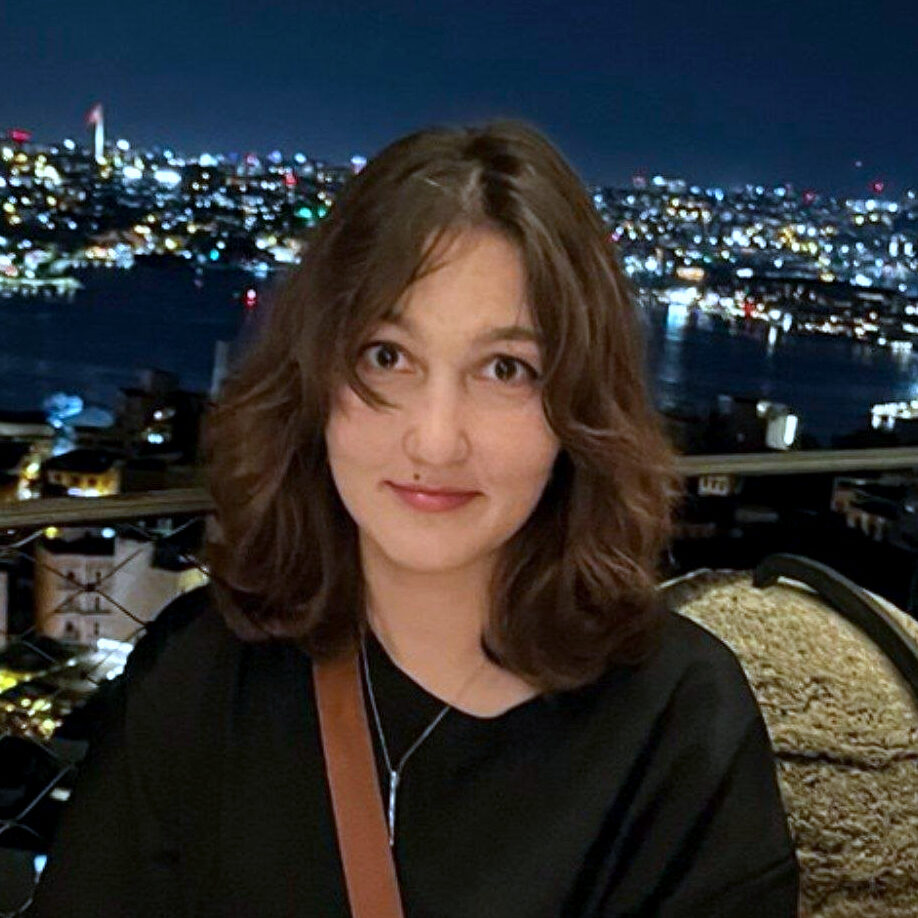
Naida Abidova is a curator and a community activist from Sukhum/i, Abkhazia¹. She has organised exhibitions, workshops, lectures and research initiatives. Her main area of focus is the intersection between the art and the community and tradition that surround it. She takes particular interest in the connections between art and nature, as well as the research aspects of the creative work. In her work with SKLAD she participated in several workshops and seminars, including the 2019 artist collaboration initiative with artasfoundation, and the 2024/2025 programme for curators. The result of the latter was the 2025 exhibition In Honor of Those Who Stand By Water. In the same year, she organised a series of lectures on the history and traditions of Abkhaz society, collaborating with researchers and political figures alike. She is currently the co-moderator of the artistic research laboratory The Court of the People, which focuses on the effects of punitive practices on individuals and societies.
¹artasfoundation would like to underline that its use of names and titles particularly in regards to conflict regions should not be understood as implying any form of recognition or non-recognition by the foundation or as having any other political connotation whatsoever.
Qusai Alazroni is a Syrian communications strategist and cultural organiser working at the intersection of arts, storytelling, civic engagement, and social justice. He has more than twelve years of experience with humanitarian organisations, international NGOs, and grassroots cultural initiatives across Syria, Lebanon, Libya, Nigeria, and Switzerland. He has held senior communication roles with the International Committee of the Red Cross and UNHCR, and previously managed Action for Hope’sLandscapes of Hope, a transnational network connecting artists and civil society organisations across 16 countries. Qusai is the co-founder and manager of the Sahnaya Cultural Forum, an independent grassroots platform for arts, heritage, storytelling, and civic participation in Rural Damascus. After returning to Syria in 2025, he led the Forum’s relaunch, developing programmes that bring together musicians, writers, filmmakers, young artists, cultural practitioners, and local communities through concerts, film screenings, workshops, exhibitions, and public dialogue. He is also involved in the Dar Sahnaya cultural hub and Sahnaya Community Museum initiatives, which explore memory, placemaking, and heritage as tools for social cohesion, cultural rights, and recovery in a community shaped by conflict, displacement, and fragile public trust.
Anastasia Alexandrova has twenty years of experience as an art historian and cultural coordinator, collaborating with state and independent cultural institutions as well as publishing houses in Russia and Switzerland. In addition to her degree in art history from the Russian State University for the Humanities, Anastasia holds a BA in Conservation of Modern Materials and Media from the Bern University of the Arts and has worked at the Solomon R. Guggenheim Museum in New York.
Abdullah Alkafri is a playwright, cultural manager and cultural activist. His work spans cultural policy, strategic planning and arts education. As an author and researcher, he has published academic works on art, society and cultural change, including On the Margin’s Margin: Some Fragmented Thoughts on the Circumstances of Those who Make Art. His writing focuses on cultural displacement and artistic expression during crises, examining independent culture in the SWANA region. Based between Brussels and Beirut, he lectures at the Institute of Fine Arts and Audiovisual Studies, Beirut, teaching cultural production sociology, playwriting and theatre direction. Abdullah Alkafri holds a PhD in theatre studies from Saint Joseph University, Lebanon. Previously, he served on the International Programme Advisory Committee for the 8th World Summit on Arts and Culture (2019, Malaysia).
Alina Arakelian is a self-taught artist based in Sukhum/i, whose works explore the fragility of memory and human perception. Drawing on her own experience and stories, as well as her philological background, she creates artworks that focus on the dualities between the personal and the archetypal, the internal and the external, the current and the generational in order to see where the lines blur, and the space becomes liminal. One of Alina’s primary mediums of choice is textile, as its long-standing connection to memory and ability to reflect both personal and collective makes it a great material to work with. In addition, she uses digital and traditional art in her practice. Alina participated in group exhibitions and hosted events at the cultural platform SKLAD_. She is currently creating a series of digital and textile works about the interrelation of the person and the city, and is planning a textile installation that connects the themes of mental health in connection with mythological and the archetypes.
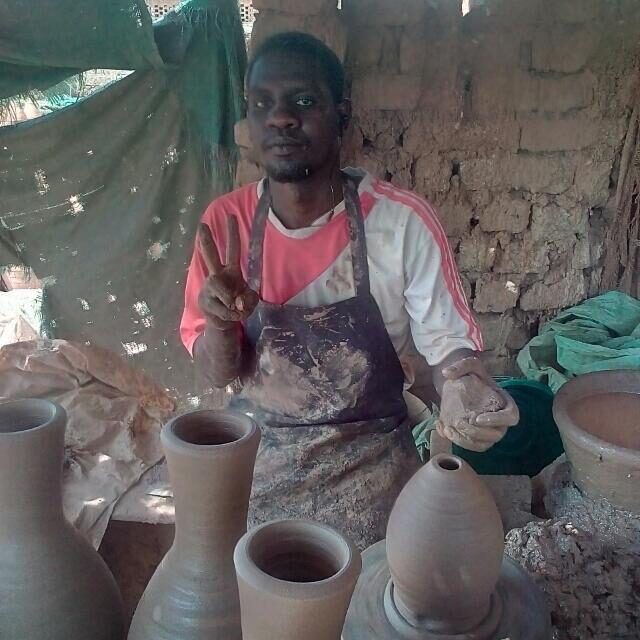
Mohammed Hamad Al-Sayed Al-Zein Al-Haj is a Sudanese ceramic artist and traditional potter based in Al Qamayer, Omdurman, Sudan, one of the countryʼs oldest traditional pottery communities. He has practised pottery for more than twenty-six years, having learned the craft from his father and uncles through a family tradition passed down across generations. Working entirely with traditional techniques, Mohammed creates functional and decorative earthenware, including water jars (qulla), storage vessels (zeer), planters, clay stoves, and ceramic objects. Every stage of the process, from preparing the clay to shaping and firing, is carried out by hand using inherited methods and locally sourced materials. During the ongoing war in Sudan, Mohammed remained in Omdurman despite the risks and economic hardship. After his workshop was damaged during the conflict, he rebuilt it in 2026 with the support of his community and resumed his practice. Alongside his artistic work, Mohammed teaches traditional pottery techniques through community workshops, school visits, and collaborations with the College of Fine Arts at the Sudan University of Science and Technology. He is committed to preserving one of Sudan’s oldest living craft traditions and believes pottery is more than a livelihood: it is a living cultural heritage that strengthens community, preserves knowledge, and embodies resilience in times of conflict.
Florence Balthasar has been working at Zurich University of the Arts (ZHdK) since 2019, first as Head of International Affairs and since 2026 as Head of External Affairs and Cooperations. As such, she is responsible for the university’s international positioning as well as the strategic development, maintenance, and coordination of institution-wide partnerships and collaborations. The External Affairs and Cooperations team is situated within the University Development unit at the Rectorate of ZHdK. Prior to that, Florence worked for seven years in Brussels at the Swiss Contact Office for European Research, Innovation and Education (SwissCore) as an advisor and then co-head of Office. Florence is active in several expert and strategy groups nationally and internationally. She currently serves as co-chair of the Swiss Section of Scholars at Risk and was a member of the Board of the Swiss think tank on foreign policy Foraus between 2020 and 2023. She holds a master’s degree in translation from the University of Geneva and a master’s degree in international relations and communication from the Université Libre de Bruxelles.
Monika Bolliger studied history, Arabic and international law at the University of Zurich and lived in the Middle East for a total of nine years – in Damascus, Jerusalem, Cairo and Beirut. She is fluent in Syrian Arabic and worked for seven years as the NZZ’s Middle East correspondent. In collaboration with the Yemeni think tank Sanaa Centre for Strategic Studies, she was also active in peacebuilding as well as in supporting local knowledge production and mentoring Yemeni researchers. She later worked as a Middle East editor for SPIEGEL and as a producer for the Echo der Zeit radio programme at SRF. A key driving force behind her work is to help understand historical and sociopolitical contexts of societies in the Middle East, and how these in turn affect peopleʼs views and their agency – through listening to people and giving them a voice. Her book Tripoli – The Middle East Mirrored in a City was published in 2021 in German. She has been head of the Global department at the Zurich-based REPUBLIK magazine since April 2026.
Rusanda Curcă is a cultural manager, researcher, activist, and community DJ from the Republic of Moldova with more than fifteen years of experience in developing cultural programmes, strengthening independent organisations, and activating public infrastructure through participatory processes. Trained in Theatre Studies and the History of Audiovisual Arts at the Academy of Music, Theatre and Fine Arts in Chișinău, she began her career in arts education, research, and theatre before moving into cultural management, curatorial practice, advocacy, and institutional development. Since 2015, she has been the co-founder and executive director of the Arta Azi Center for Cultural Projects. From 2021 to 2026, she led the Coalition of the Independent Cultural Sector of the Republic of Moldova, a national network promoting cultural rights, artistic freedom, and recognition of the independent cultural sector as an integral part of public culture.
Ruth Daniel is CEO and artistic director of In Place of War, a global organisation that has spent over 22 years using music, art and creativity as tools for change in communities affected by conflict, climate crisis and social injustice, working across more than 40 countries. She is also founder and director of EarthSonic, IPOWʼs global music and climate programme, and works as a curator, trustee and chairwoman. Raised on music and radical activism, Ruth began as a musician and independent label founder, and co-founded Un-Convention. Her work sits at the intersection of art and urgency, producing collaborative music, film and immersive projects that tell the stories of our time from the frontlines of conflict and climate change. She is co-author of Make Art Not War: Revolutionary Art in a Post-Truth World, with Teresa Ó Brádaigh Bean and Shereen Perera, featuring a foreword by Brian Eno. Ruth holds an Honorary Research Fellowship at the University of Manchester and received the WOMEX Professional Excellence Award in 2024. She is based between Manchester, UK, and Reykjavik, Iceland.
Bettina Ganz has been working in the field of international relations in arts higher education for many years. Current role: Project co-ordinator at the ZHdK; collaborating with artasfoundation on the Cooperation for Art and Peacebuilding (CAP) initiative.
Previous roles: Developing mobility programmes and international partnerships at the Zurich University of the Arts (ZHdK) and its predecessor institutions; designing, supporting and implementing large and small-scale cooperation projects with partners in Switzerland and abroad; organising events and conferences in the field of higher education in the arts; participating in and chairing various working groups and committees in the Canton of Zurich, at federal level and within international networks.
Ossama Halal is a theatre maker and founder of Koon Theatre, established in Damascus in 2002. He graduated from the Higher Institute of Dramatic Arts in Damascus in 2004. His work spans street theatre, site-specific performances, physical theatre, and experimental performance. In 2013, after relocating to Beirut, he founded Koon Studio and Koon Lab, an independent space dedicated to artistic production, research, and training, bringing together professional and emerging artists. His artistic practice explores the relationship between theatre, audience, and place through performances that combine movement, music, and visual imagery. He is particularly interested in creating independent artistic spaces that connect training with performance-making, while encouraging experimentation, collaboration, and the exchange of artistic practices.
Olivia Jaques is a Vienna-based artist, cultural worker, and artistic researcher concerned with the artistic and academic fields, focusing on site-specific, feminist, and artistic framing as a potential for action. In this context, she explores the question of how artistic ways of working – especially those outside the conventional exhibition context – can contribute to a critical confrontation with habits and social orders, and to what extent these can promote emancipatory ways of acting as well as a critical discourse. She is dedicated to the conception of artistic framing as a socio-political practice (in the form of workshops, collective artistic work, or within the framework of teaching and experimental, performative, and discursive formats). The artistic cornerstone of her work is her collaboration with Marlies Surtmann. As an artist and artistic research duo (Performatorium), they have been organising artistic encounters within this framework since 2017. Olivia Jaques is part of Mz*Baltazar’s Laboratory collective (2021–), which runs a feminist art/project space in Vienna and creates annual art programmes, as well as being part of artasfoundation (2016–2026).
Alona Karavai is a Ukrainian cultural worker, curator, and essayist. She co-founded the project space Asortymentna kimnata, the residency house Khata-Maysternya and the publishing project ilostmylibrary. After fleeing Donetsk in 2014 when her workplace, Izolyatsia, was seized and turned into an illegal prison, she focused on arts and community work. Since 2022, she has been coordinating emergency evacuations of non-musealisedart archives, residencies for displaced artists and artists with a combat background, as well as educational laboratories for teenagers and adults like School of contemporary art fra fra fra. She was a fellow in the first cohort of the Socially Engaged Arts programme, received the KAIROS Prize in 2023, and was awarded an Igor Zabel Award Working Grant in 2026. Based in Kyiv, she explores themes of peripheries, absence, as well as vitality and death. More recently, she focused on facilitating Death Cafés and piloting arts and community formats about mortality as a way of enriching how we live. This work includes the launch of the Festival of Death in Kyiv in November 2026. Her practice encompasses facilitation, writing and participatory curating. One example is unboxing, a project launched during her Socially Engaged Arts Fellowship.
Lusine Kharatyan is a Yerevan-based writer and cultural anthropologist. Her writing is significantly influenced by her anthropological research, fieldwork, and travels. Her fiction and essays touch upon the issues of conflict, trauma, memory, identity and dealing with the past, and have been published in English, Georgian, German, Greek, Maltese, Polish and Russian. In 2023, Kharatyan’s novel Սիրիավեպ (A Syrian Affair) was shortlisted for the European Union Prize for Literature, and in 2025 she was awarded the Saroyan Prize for Short Story of Yerevan International Book Fest. She is a member of PEN Armenia and has been chair of its Women Writer’s Committee since 2021. Currently, Kharatyan is the director of the Center for Continuing Education at Yerevan State University and a researcher at the Department of Cultural Anthropology of the Institute of Archaeology and Ethnography, National Academy of Sciences of Armenia. In 2012–2018, Kharatyan headed DVV International (Institute for International Cooperation of German Adult Education Association) Armenia Country Office, and in that capacity led several multi-year and multi-component Armenia–Turkey reconciliation programmes dealing with oral history and adult education. Her research, publication and practical work range from memory politics, education policy, adult education, reconciliation and conflict resolution to issues related to ethnic, religious and linguistic minorities. She is also an active advocate of the Armenia–Azerbaijan peace dialogue. Kharatyan holds a Graduate Certificate in Mediation and Conflict Resolution from the University of San Diego (2024), a master’s degree in Public Policy from the University of Minnesota (2004), a Diploma in Demography from Cairo Demographic Center (2000), and a Diploma of higher education in History/Cultural Anthropology from Yerevan State University (1999).
Grzegorz Kwiatkowski is a Polish poet, musician, essayist and memory activist based in Gdańsk. He is Artist-in-Residence at Yale’s Fortunoff Video Archive and the vocalist and guitarist of Trupa Trupa. At Yale, his current work brings together poetry, sound, moving image and performance. Trupa Trupa has released music through Sub Pop, recorded an NPR Tiny Desk concert and a BBC session, and performed at festivals and venues around the world. The band’s music has appeared in films by Oscar-nominated director Agnieszka Holland, including Green Border and Franz. Kwiatkowski’s essays have appeared in The Guardian, Project Syndicate, Flaming Hydra and World Literature Today.
At the University of Oxford, he co-curates programmes on exclusion, hatred and political violence. His long-term memory activism in Gdańsk and around Stutthof includes campaigns to preserve endangered sites, objects and histories, most notably nearly half a million shoes connected to the camp. Across poetry, music, essays, public memory and human-rights work, he treats these fields as one practice: exploring how art and public speech can respond to violence, authoritarianism, hatred and dehumanisation.
Dr Silke Lange has over twenty years of experience in creative arts education in a variety of roles and organisations, across levels and subjects, and geographical borders. Silke’s research into critical inclusive art and design pedagogies focuses specifically on collaborative, ethical and interdisciplinary practices. She is an advocate for intercultural dialogue through creative, collaborative and socially engaged practices that support agendas for social change. Silke is lead facilitator of participatory consultation and community building of the UAx Platform, a European network connecting Ukrainian art schools with ELIA member universities; and advisor, researcher and moderator of the ELIA Dialogue Series: Higher Arts Education in Times of Conflict and Crisis. Silke is currently Reader in Hybrid and Participatory Pedagogy and Head of Educational Research at the University of the Arts London.
Find out more about Silke’s research on the UAL portal.
Rahel Leupin has been the director of artlink since 2021. She has a background in performing arts as a researcher (PhD 2019 Roskilde University), a curator (Fabriktheater Rote Fabrik, Zürcher Theater Spektakel, Belluard/Bollwerk, YBCA San Francisco) and a funder (Pro Helvetia, Canton Basel/Baselland). Through her company Public Culture Lab, Rahel provides consulting, evaluation, and facilitation services to cultural institutions and funding bodies within the cultural landscape of Switzerland.
Leon Logua holds a degree from the Faculty of Physics and Mathematics at the Abkhazian¹ State University. He works as a co-administrator and project manager at the cultural space SKLAD_ in Sukhum/i, where he oversees the technical infrastructure and production of events while coordinating interdisciplinary projects, art programmes, and research laboratories. Working within an isolated cultural landscape, he focuses on sustaining the local art ecosystem, managing archival materials, and facilitating international exchanges and collaborative initiatives.
¹artasfoundation would like to underline that its use of names and titles particularly in regards to conflict regions should not be understood as implying any form of recognition or non-recognition by the foundation or as having any other political connotation whatsoever.
Stella Mendonça is a soprano and founder of MUSIARTE Foundation – Conservatory of Music and Dramatic Arts in Maputo, a pioneering institution for professional music and arts education in Mozambique. With more than three decades of artistic and pedagogical experience, she has built an international career as a performer, educator and cultural leader, with training in Paris, Lyon, New York and Bern. As an artistic entrepreneur, director and curator, Stella has created and led numerous artistic and educational initiatives, building opportunities for young musicians and strengthening access to arts education in Mozambique. MUSIARTE is an Associate Member of the Association Européenne des Conservatoires (AEC), connecting the institution to international music-education networks. Since 2022, Stella has developed and directed Music for All and Eco’Band projects in Maputo and Cabo Delgado, using music, music therapy, creativity and arts-based approaches to engage young people and communities affected by conflict, fostering wellbeing, resilience, belonging and social cohesion. Eco’Band also promotes creative reuse through locally made instruments and collective music-making. In 2016, she received the Portuguese Government Medal of Merit for her contribution to the arts and intercultural dialogue.
It is said that Rabih Mroué is a theatre-maker and a playwrighter. It is also said that he is a visual artist and a video-maker. It is said that in his work, Mroué blurs the lines between fiction and reality. It is said that he has presented his work at international festivals and exhibited his artworks in museums and art centres... and much more has been said about him. He is always surprised by the elements chosen to highlight his bio: civil war, Arab, censorship, semi-documentary theatre, post-traumatic themes, and other clichés... Mroué, personally, cannot confirm whether any of these assumptions are true. What he can confirm with certainty is that, despite his efforts, he has never succeeded in becoming a citizen – neither in his own country nor elsewhere. It is also true that Mroué once wanted to be a professional musician, but he never managed to become one.
Daniela Nofal stewards the work of the Alliance for Socially Engaged Arts, a collaborative philanthropic fund working to strengthen the conditions for socially engaged arts to thrive across Europe and advance recognition of their role in driving positive social change. A cultural organiser and creative producer, Daniela’s work sits at the intersection of arts, community engagement, and social change. She has a longstanding interest in migration, diaspora, belonging, mental health, and transnational collaboration, and has worked with artists, cultural organisations, funders, and communities across the UK, Europe, and the SWANA region. At the heart of her practice is a commitment to exploring how arts and culture can bring people together, cultivate solidarity, and open up new possibilities for collective imagination and action. Daniela has co-founded several artist-led initiatives, including Sadaa Sound Syndicate and Makkam, and was a co-founder and director of London’s Syrian Arts and Culture Festival, a ten-day multidisciplinary celebration of Syrian arts, culture, and contemporary creative practice.
Maxim Poleacov currently works in Chișinău (Moldova) as a cultural operator, publisher and coordinator of 3rd Space Studio – a communal workshop for diverse practices related to DIY printed matter. Over the years, this studio has become a key point and the basic material infrastructure for the work of such collectives as Kolxoz, Drujba, Iskra RISO-unit, and many other initiatives, contributing to the development of an independent culture of publishing and artistic cooperation in the region. Maxim’s ongoing research focuses on methodologies for samizdat (low-run self-publishing), and approaches this practice as a platform to build and develop conversations, social situations, and communication spaces. Examples include grassroots editorial experiments and distribution centres, open studios and temporary services such as pop-up cafes or libraries. He examines how publishing becomes a means of interaction and a tool for organising collectives. Maxim is studying for a master’s degree in contemporary philosophy at the Moldova State University.
Daniel Rycharski describes himself as a conceptual and avant-garde artist, and works in various media, with installations at the forefront of his artistic practice. In 2005–2009, Rycharski studied graphic design at the Faculty of Art of the Pedagogical University of Kraków. He then pursued a PhD at the Kraków Academy of Fine Arts. He works with the themes of provinciality, religiosity, Christianity, and LGBTQ+ identity, seeking tensions and new relations between them. In this, Rycharski’s art also manifests his personal quest for a realm in which non-heteronormativity and the Catholic faith can coexist. He works closely with both LGBTQ+ activists and religious and agricultural societies to represent their issues and sensibilities, mediating between the consciousness of Polish cities and that of villages. Rycharski often directly engages his local community both in the reception and production of his art, as one of his main concerns is propagating art among rural communities. Besides, the artist lectures at the Academy of Art in Szczecin. In 2021, the film Fears, based on Rycharski’s life, directed by Łukasz Ronduda and Łukasz Gutt, premiered.
Dagmar Reichert (PD, Dr., M.A., Mag.phil.) studied geography, sport and philosophy in Vienna and Toronto; from 2002 to 2006, she held the post of full professor of cultural geography / social sciences at the University of Kassel. From 2001 to 2023, she taught art theory at the Zurich University of the Arts (ZHdK), where she also headed the CAS programme Arts and International Cooperation from 2016 onwards. She currently works in research and consultancy, specialising in the cultural field. In 2011, Dagmar Reichert initiated the establishment of the Artas Foundation, the Swiss foundation for art in conflict regions. She led the foundation as its managing director until 2024 and is now a member of the foundation’s board.
Emile Saba is a Palestinian theatre director, actor, and cultural leader, currently serving as the artistic director of ASHTAR Theatre in Ramallah. He began his theatrical journey at ASHTAR – the home that shaped his artistic and human sensibility – continuing his studies in the United States, where he earned an MFA in Stage Acting from the University of Connecticut. Saba’s work weaves together poetry and reality, imagination and commitment, drawing on magical realism as a bridge between beauty and political necessity. Throughout his career, he has presented works across Palestine, the Arab region, Europe, and the United States, directing, performing, and leading diverse theatre projects, including 2077: Who Wants to Survive, Cosmos, Love on the Shelf, Jabra, and Guernica Gaza: Visions from the Center of the Earth. Alongside his artistic practice, Saba devotes much of his work to theatre education and training. He has designed and led workshops, courses, and long-term programmes for actors, educators, and young people at ASHTAR Theatre and in collaboration with other institutions, academies, and universities in Palestine and abroad. Saba views theatre as a space for reflection and collective action – a tool for expression, questioning, and transformation.
For more than 25 years, Junaid Sarieddeen has worked across performance, creation and training, exploring the relationship between personal experience, collective histories and the social and political contexts in which theatre is made. Alongside his artistic practice, Junaid designs and leads workshops in acting, devising, dramaturgy and directing. Through The Actor within You and The Transformative Actor, he invites participants to explore their capacity for transformation. He has extensive experience in theatre mediation and in training practitioners who use theatre in psychosocial settings. At Zoukak, he has helped develop performances, publications and programmes that bring artists and communities into dialogue. Junaid holds a BA in theatre, a BA in philosophy and a master’s degree in theatre research.
Dr Jana Shostak is a tactical, conceptual artist, help activist, surrealist realist and extremist according to the Lukashenko regime. Blurring the lines between art and direct political action, she explores mass media and socio-political structures as mediums for intervention, treating public appearances as site-specific exhibitions. She created Minute of Scream, recognised among the top ten Polish visual artworks of the last three decades. Her practice synthesises art with activism, driving improvements in refugee reception centres, immigration law amendments, and co-founding the Partyzanka movement supporting newcomers from Belarus and Ukraine. Curator Sebastian Cichocki notes that she “uses art as a master key, breaking into non-artistic systems” like language, religious pilgrimages, and beauty contests. Since 2018, Shostak has developed Miss of the East, a feature-length comedy about patriarchy. She has exhibited internationally at institutions like BOZAR (Brussels), Neues Museum (Nuremberg), and Zachęta (Warsaw), and presented at panels including the Cannes Lions festival.
Vladimir Us is an artist and curator based in Chișinău, Moldova, and a founding member of Oberliht Young Artists Association. He studied art, curating, cultural management, and cultural policy in Chișinău, Grenoble, and Belgrade. Since 2000, under the Oberliht umbrella, he has initiated several cultural platforms and publications in collaboration with artists and cultural workers from across the region, including the [oberlist] mailing list, Postbox Magazine – literature, art & attitude, Apartamentul Deschis (Flat Space) / B68 and Kiosk AIR (an artist-in-residence programme), Zpațiu (Zpace) (an independent arts and culture space in Moldova), among other projects. Through his curatorial work, he aims to increase access to socially engaged art, stressing the need for spatial justice and an inclusive urban environment in Chișinău and other former-Soviet cities. His cultural activism focuses on the development of public spaces as democratic infrastructure of the city, complementing art education curricula with relevant artistic practices and theoretical modules, and on building a resilient independent cultural scene in Moldova and in the region. As a long-distance cyclist, he has been passionate about bike culture, supporting the growth of the cycling movement as a form of alternative (non-motorised) transportation both within urban areas and outside them.
Nicole Vögele is a Swiss filmmaker who meanders between investigative journalism, essay filmmaking and wondering what being a professor at an art academy could be. As a journalist, Nicole focuses mainly on collaborative investigative projects. She has been part of several acclaimed projects that revealed systematic pushback practices at Europeʼs borders. As a filmmaker, Nicole tries to understand the world with essay documentaries, slowly, frame by frame. Her films have been screened at numerous international festivals. CLOSING TIME (2018) was awarded at the Locarno Film Festival. THE LANDSCAPE AND THE FURY (2024) won the Grand Prix at Visions du Réel, the Doc Alliance Award and was nominated for the European Film Award. Since 2021, Nicole is a professor for moving image at Dresden Academy of Fine Arts.
Miriam Walther (she/her) grew up between Switzerland and Brazil. She studied contemporary dance, theatre directing, philosophy and political science. She has been co-director of Gessnerallee in Zurich since the 2024/25 season. She also serves on the board of the Stiftung für Medienvielfalt (Foundation for Media Diversity) in Basel and is a member of the School Commission of Kantonsschule Uetikon am See. Prior to this, her roles included being a member of the founding team at Publix, House of Journalism in Berlin; managing director of the digital magazine Republik; co-director of the central stage at the Zürcher Theater Spektakel; and co-founder of the production platform artFAQ. She has served as a jury member for, amongst others, Campus in Porto (2026), the Zürcher Theater Spektakel (2018) and 100° Berlin (2014). In 2015, she received the City of Zurich’s Cultural Award in the field of theatre, and in 2021 she was named “Media Manager of the Year” by the industry magazine Schweizer Journalist.
Farah Wardani is a registered drama therapist (NADTA), Lebanese theatre actress, trainer, clown doctor, puppeteer, and applied theatre practitioner. She holds an MA in Drama Therapy, a Diploma of High Studies in Theatre, and a BA in Psychology. As Director of Laban a Lebanese theatre-based NGO, she leads theatre-based social change, capacity-building, and therapy programmes. A Playback Theatre practitioner, trainer, actress, and conductor, she also specialises in Theatre of the Oppressed and other creative techniques to foster healing, activism, and dialogue. Farah is deeply committed to working with survivors of war and violence from Arab communities, using storytelling and performance to amplify voices and reclaim narratives. Whether on stage or in workshops, she believes in the power of theatre to break silence, ignite change, and transform lives.
Rana Yazaji is executive director ofartasfoundation, the Swiss Foundation for Art in Regions of Conflict, and co-director of the CAS Arts and International Cooperation at Zurich University of the Arts. As a trainer, researcher and cultural manager, she combines research and cultural practice on three connected levels: art practices, institution building and policy discussions. Trained in theatre in Damascus and Paris, she worked as a dramaturge and led community theatre projects in rural Syria. In 2011, she co-founded Ettijahat – Independent Culture, a Syrian organisation that supports independent arts and culture in social and political transformation. In 2014, she became Executive Director of Culture Resource (Al Mawred Al Thaqafy), active across the Arab region. She has written several practice-oriented research papers on cultural policy, cultural cooperation and the arts in conflict contexts. These include the Syria Compendium of Cultural Policies (2009, updated 2013); An Exercise in Sitting with Discomfort: Towards More Equitable Support for Relocation in North-South Contexts (ifa, 2022, with Marion Schmidt); and The Shifting Borders of Cultural Mobility, a chapter of UNESCOʼs Re|Shaping Policies for Creativity report (2026, with Marie Le Sourd).
Maya Zbib's practice explores theatre as a space for encounter, inquiry, and transformation, engaging with the political, social, and poetic dimensions of performance. She has created and been commissioned to develop work with international festivals, universities, and cultural institutions. Her recent work includes co-directing Ruinous Gods, a new opera commissioned by Spoleto Festival USA and premiered in 2024. Her works, including Three Verses of Solitude (2025), Anatomy Titus (2022), and The Love Project (2019), have travelled internationally, with presentations at institutions and festivals including the Royal Court Theatre, MUCEM, LIFT, Baxter Theatre, MASS MoCA, The New York Public Library, Southbank Centre, Santiago a Mil, and Williams College. Zbib teaches devising, physical theatre, and writing in academic and professional contexts in Lebanon and internationally. She is a Chevening/KRSF and Cultural Leadership International alumna, an ISPA fellow, and a former protégé of Peter Sellars through the Rolex Mentor and Protégé Arts Initiative. She authored UNESCO’s 2018 World Theatre Day Message and received the Gilder/Coigney International Theatre Award’s Special Recognition Award in 2023.
Aurelien Zouki is a co-founding member of Collectif Kahraba, a performing arts company and cultural operator, actively involved in Lebanon since 2007. He is initiating the creation of many places of encounters such as Hammana Artist House artistic residency and cultural hub that he co-founded with Eric Deniaud in 2017. The multidisciplinary festival Nehna well amar well Jiran, created in 2011 is also one of these gathering hubs happening in four different cities, villages or refugee camps. Developing an artistic language crossing dance, puppetry, mask and theatre, he has been part of the creation of around 20 performances that tour internationally and he is invited to collaborate in many countries.
Sena Taha is a researcher in refugee literature with three identities, three homes, and none at all. She holds a BA in English literature from Damascus University, and an MA and PhD in civilisation studies from the Alliance of Civilisations Institute (MEDIT), Ibn Haldun University. Her PhD dissertation, Writing Refugee Lives, received recognition at 10 international academic forums, alongside the CARFMS/LERRN Lived Experiences of Displacement Essay Award and Ibn Haldun University’s best PhD thesis award for 2025/26. She is a teacher, translator, public speaker, curious traveller, and lifelong explorer of underrepresented human experiences through artistic and cultural narratives.